A Celebration of Life
From Oaxaca to Black Rock City to the Mississippi River
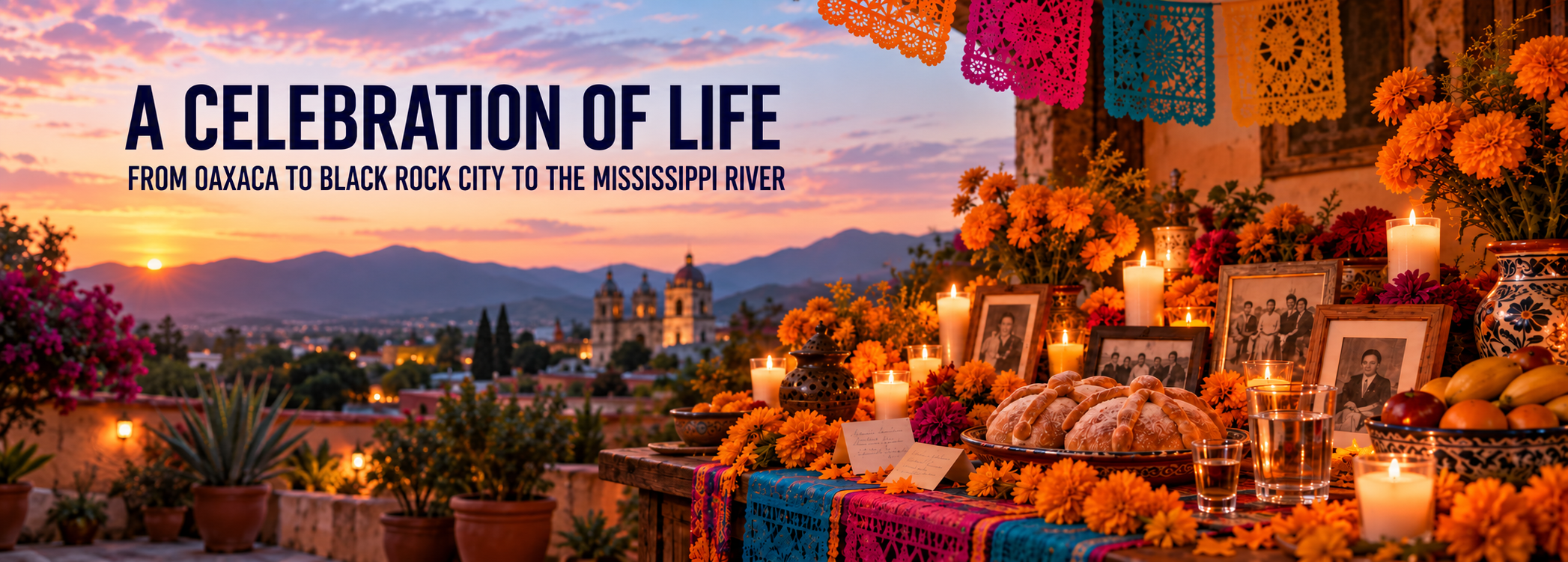
Maybe your first introduction to Día de los Muertos came from the movie Coco. You saw the marigold bridge, the colorful skeletons, the family photographs and the elaborate altar covered with food. You may have understood that the story was about remembering the people we love, but you may not have known how much of what you were watching was connected to a real and beautiful Mexican tradition.
Now let me explain a little more about what you saw.
Día de los Muertos, or Day of the Dead, is not a Mexican version of Halloween. It is not intended to be frightening, and it is not a celebration of death. It is a celebration of life—specifically, the lives of the people we have loved and continue to carry with us.
I live in Oaxaca, Mexico, where Día de los Muertos is one of the most beautiful and meaningful times of the year. The streets and markets fill with orange cempasúchil flowers, candles, papel picado, sugar skulls, fruit and pan de muerto. Families prepare their homes, visit cemeteries and build ofrendas for the people they want to welcome back into their memories.
This year, we are bringing a small part of that tradition to New Orleans.
Remembering the Dead by Celebrating Their Lives
Modern Día de los Muertos traditions grew from Indigenous beliefs and rituals that became intertwined with the Catholic observances of All Saints’ Day and All Souls’ Day. The celebration generally centers on November 1 and 2, although customs and exact dates vary among Mexico’s many regions and communities. November 1 is commonly associated with children who have died and is often called Día de los Angelitos, or Day of the Little Angels. November 2 is generally dedicated to deceased adults.
In many communities, families clean and decorate the graves of their loved ones. They bring flowers, candles, food and sometimes music. They may spend hours in the cemetery talking, eating and sharing stories. From the outside, that might sound sad or even uncomfortable, but that is not the spirit in which it is done. The cemetery becomes a gathering place for the living and the people they still remember.
There can certainly be tears. Día de los Muertos does not tell anyone how to grieve, and neither will we. But it reminds us that remembering someone does not always have to be painful. A person’s death is only one moment in a much larger life, and Día de los Muertos asks us to remember the rest of the story.
Mexico’s Indigenous festivity dedicated to the dead has been recognized by UNESCO as part of the Intangible Cultural Heritage of Humanity. Its traditions are not identical everywhere, even within Mexico. Each community and each family brings its own beliefs, customs and personality to the celebration.
That is especially true of the ofrenda.
What Is an Ofrenda?
The Spanish word ofrenda means “offering.” People often use the words altar and ofrenda interchangeably, but the altar is technically the structure, while the ofrenda includes the gifts placed upon it.
Photographs are often at the heart of an ofrenda because they tell us exactly who is being welcomed and remembered. Around those photographs, families may place candles, water, salt, cempasúchil flowers, incense, papel picado, pan de muerto, and chocolate. The bright marigolds, with their distinctive color and scent, are traditionally believed to help guide loved ones home. Water offers refreshment after their journey, while candles provide light.
Then come the personal offerings: favorite meals, drinks, candy, cigarettes, toys, jewelry and little objects that say something about who that person really was. This is where an ofrenda stops being a collection of traditional symbols and becomes the story of a life.
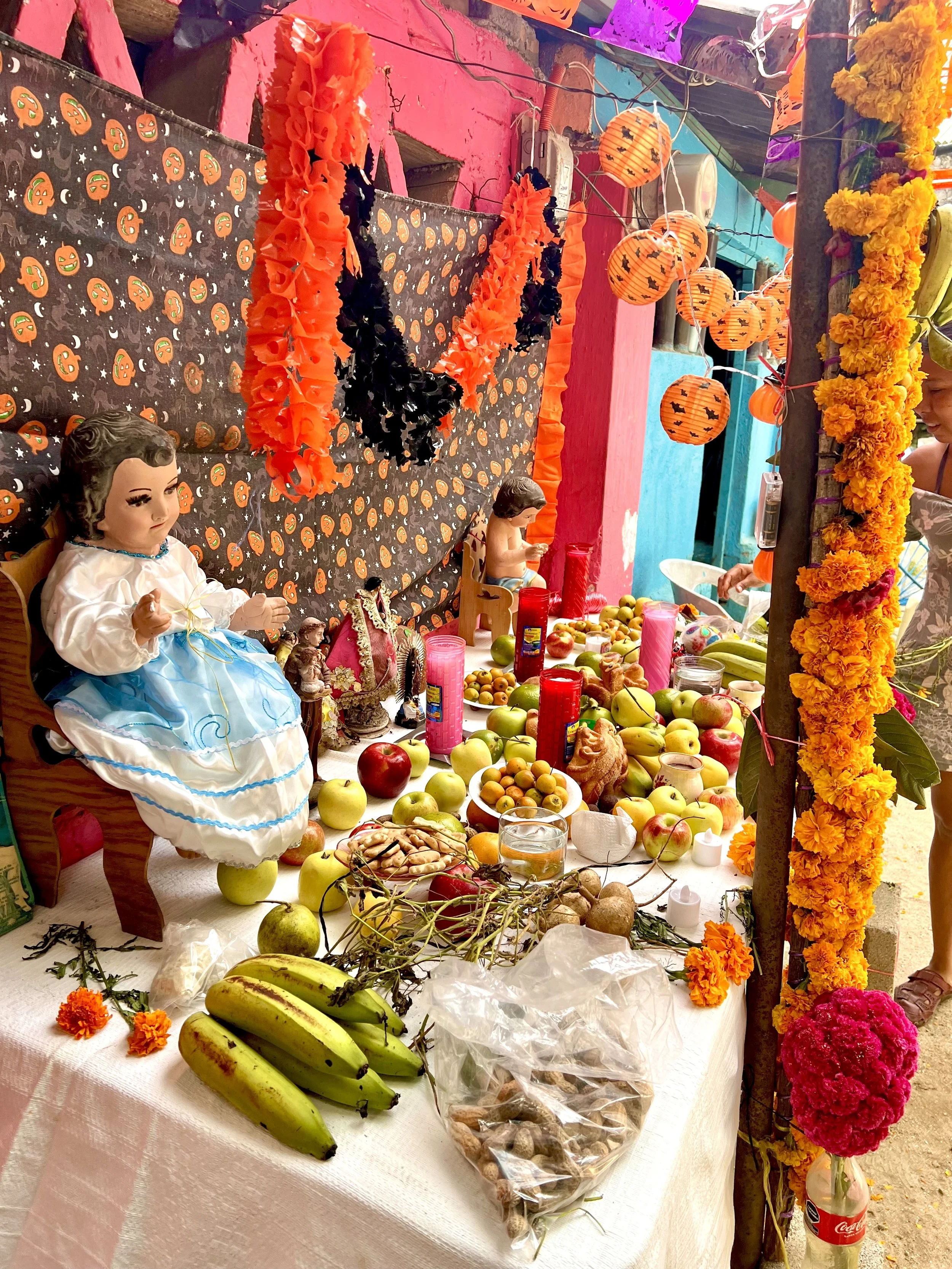
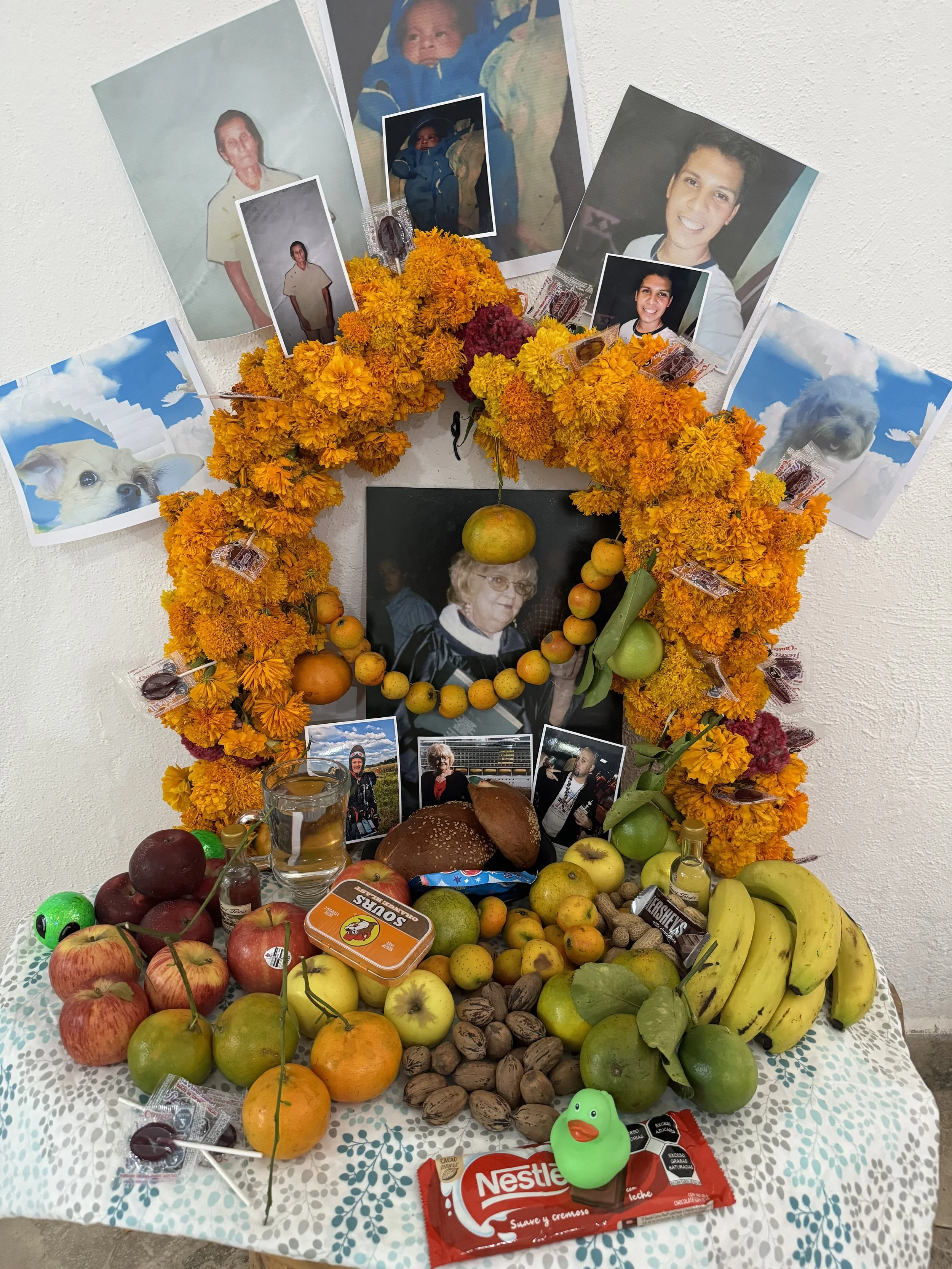
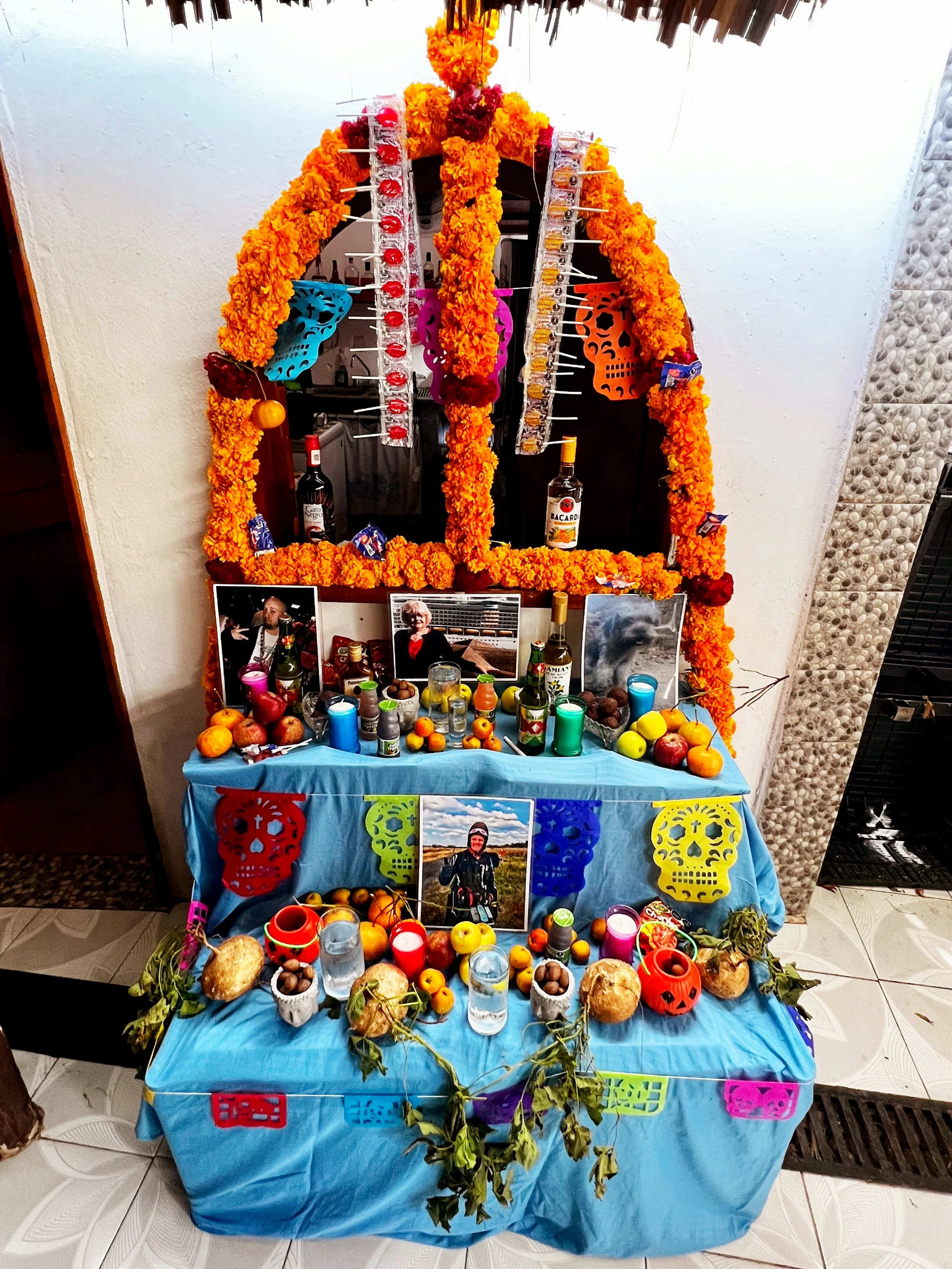
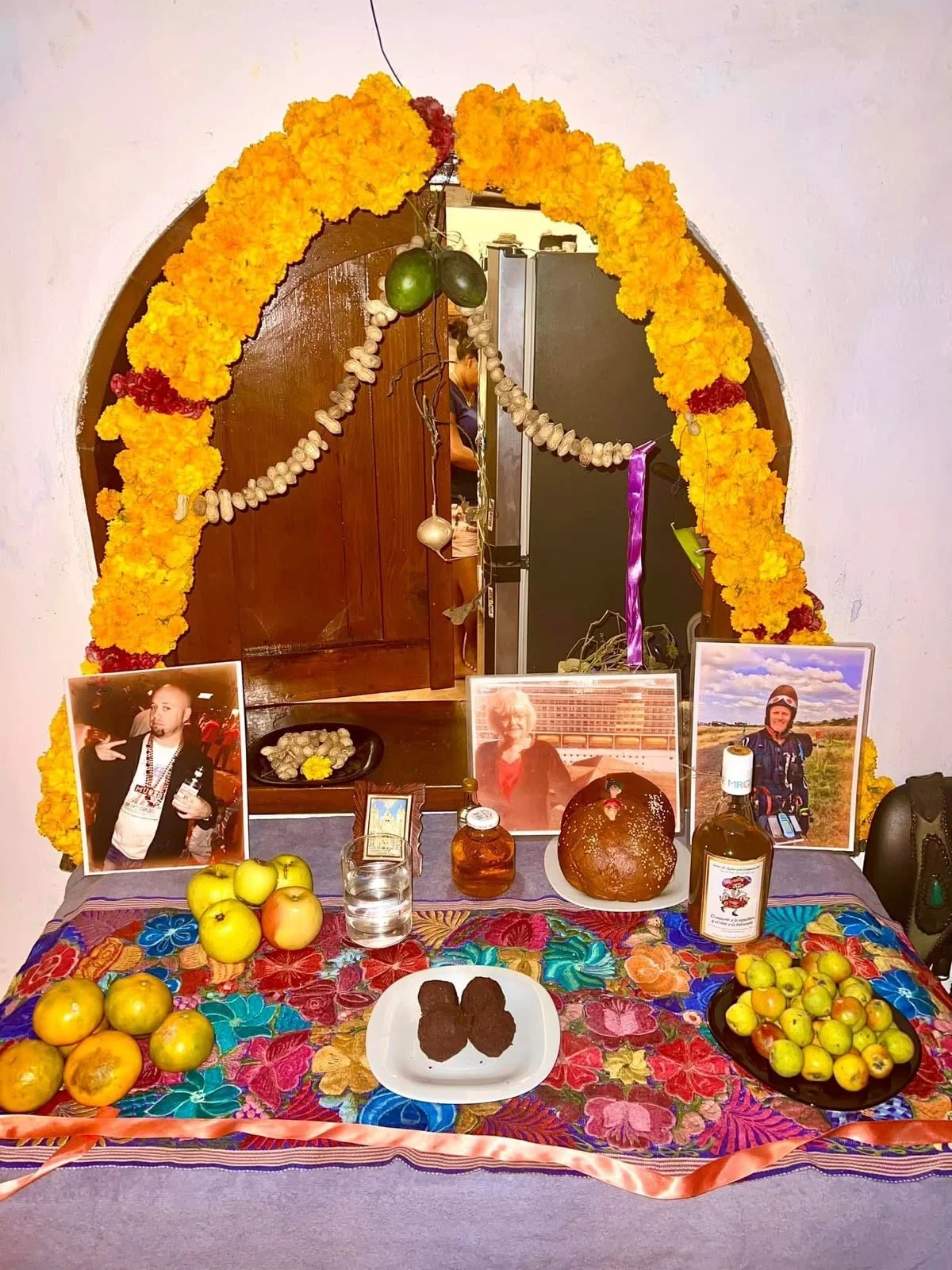
On my own altar in Oaxaca, I always place a shot of tequila for my buddy Todd. I will never forget the time we spent together in Puerto Vallarta. He would have loved Zipolite, and I often wish he could have experienced it with me. The tequila is not there because a list of instructions told me to include it. It is there because it belongs to my memories of Todd.
My mother’s photograph sits in the center. Near her photo, I always place a cigarette.
My mom had throat cancer, and she stopped smoking while she fought it. She beat the cancer and eventually got to ring that bell. She told me that quitting cigarettes was one of the hardest things she had ever done. After beating cancer, she started smoking again, and she eventually died from pneumonia because her lungs simply could not handle it.
She was a great mom. The cigarette is my personal little joke with her. She fought her battle, she rang the bell, and now she can smoke all she wants.
That may sound unusual until you understand the purpose of an ofrenda. It is not about presenting an idealized or solemn version of someone. It is about remembering the real person—their habits, pleasures, contradictions, adventures, favorite flavors, and the things that made them unmistakably themselves.
Some people believe that visiting spirits enjoy the essence or flavor of the food and drinks placed on the ofrenda. Afterward, the offerings may seem to have lost their flavor because their essence has already been enjoyed.
Of course, I am not suggesting that you eat a mango or finish a drink that has been sitting out for several days. Once your loved one has enjoyed its essence, let them have that one. Go get yourself a Hurricane to drink and a beignet instead.
The Temple at Burning Man
Long before I moved to Oaxaca and began building my own ofrendas, I experienced another tradition of remembrance in the Black Rock Desert.
Burning Man is known for art, celebration and radical self-expression. Yet standing apart from much of that celebration is the Temple, a place where people go to remember those they have lost.
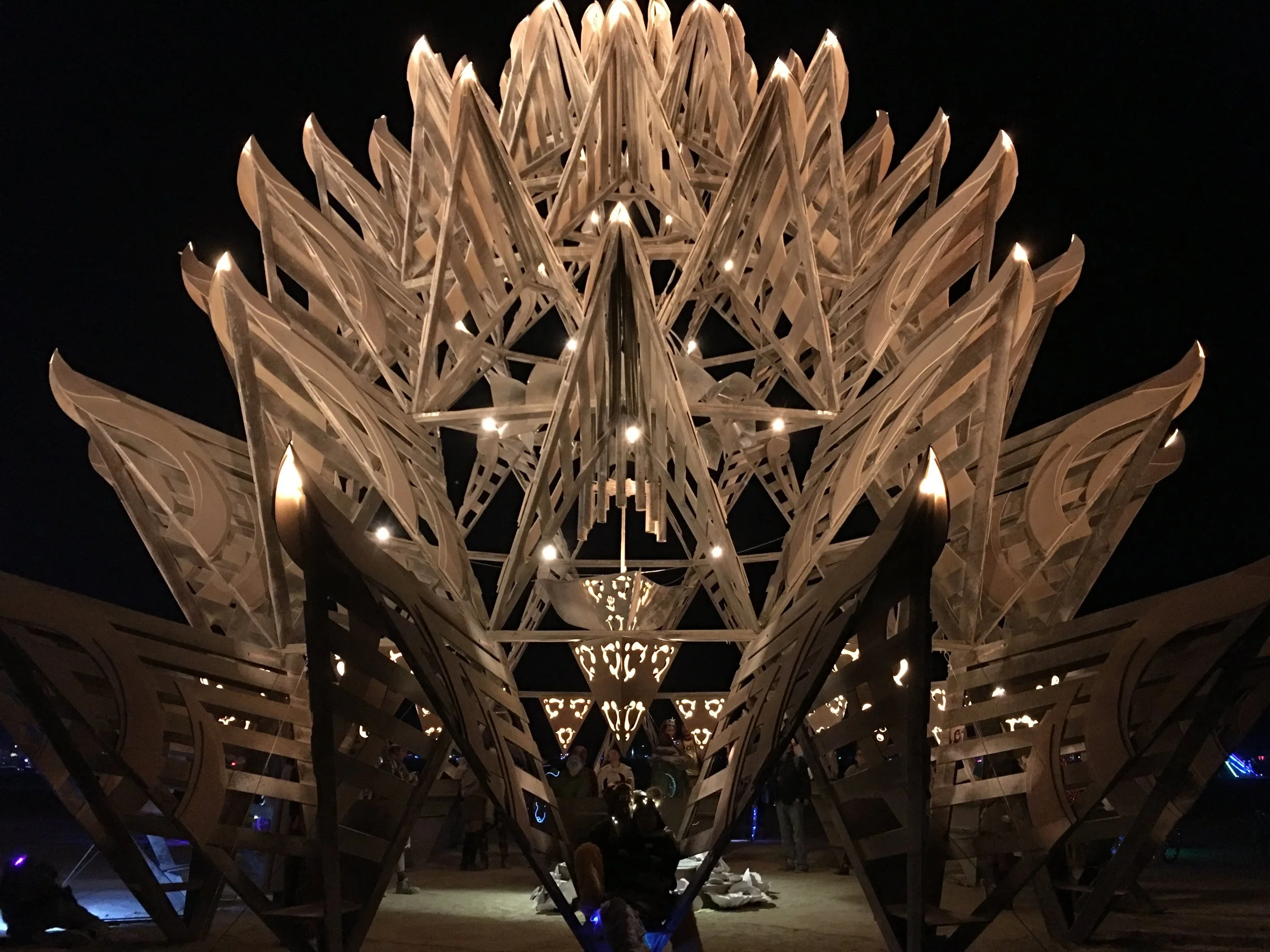
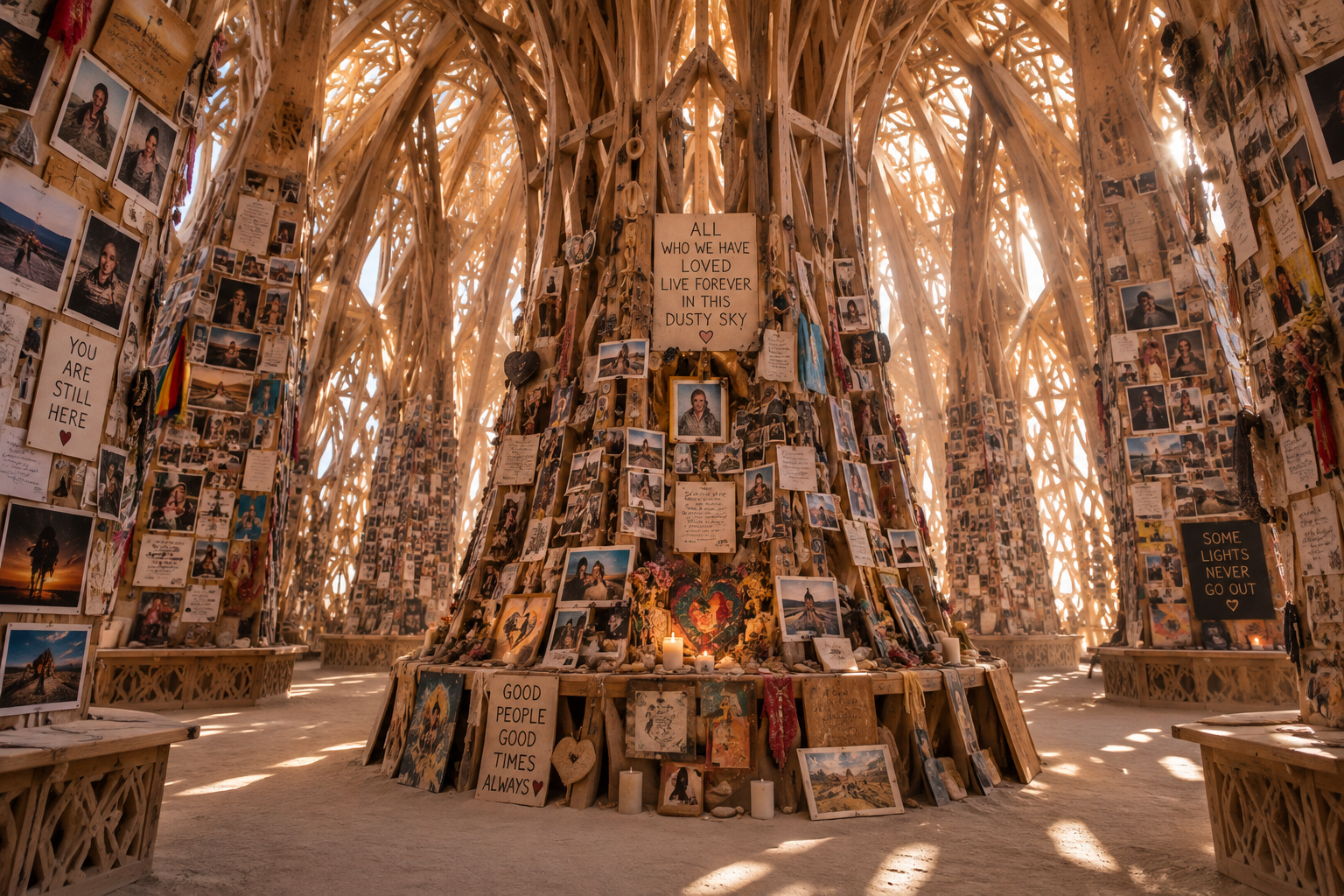

The Temple is not a traditional church. It has no denomination, doctrine or scheduled service. Yet people enter it and instinctively lower their voices.
Throughout the week, its wooden walls become covered with photographs, letters, names, stories and farewells. People leave messages for parents, partners, children, friends and animals. Some losses are recent; others happened decades ago. Inside the Temple, all of them are given a physical place.
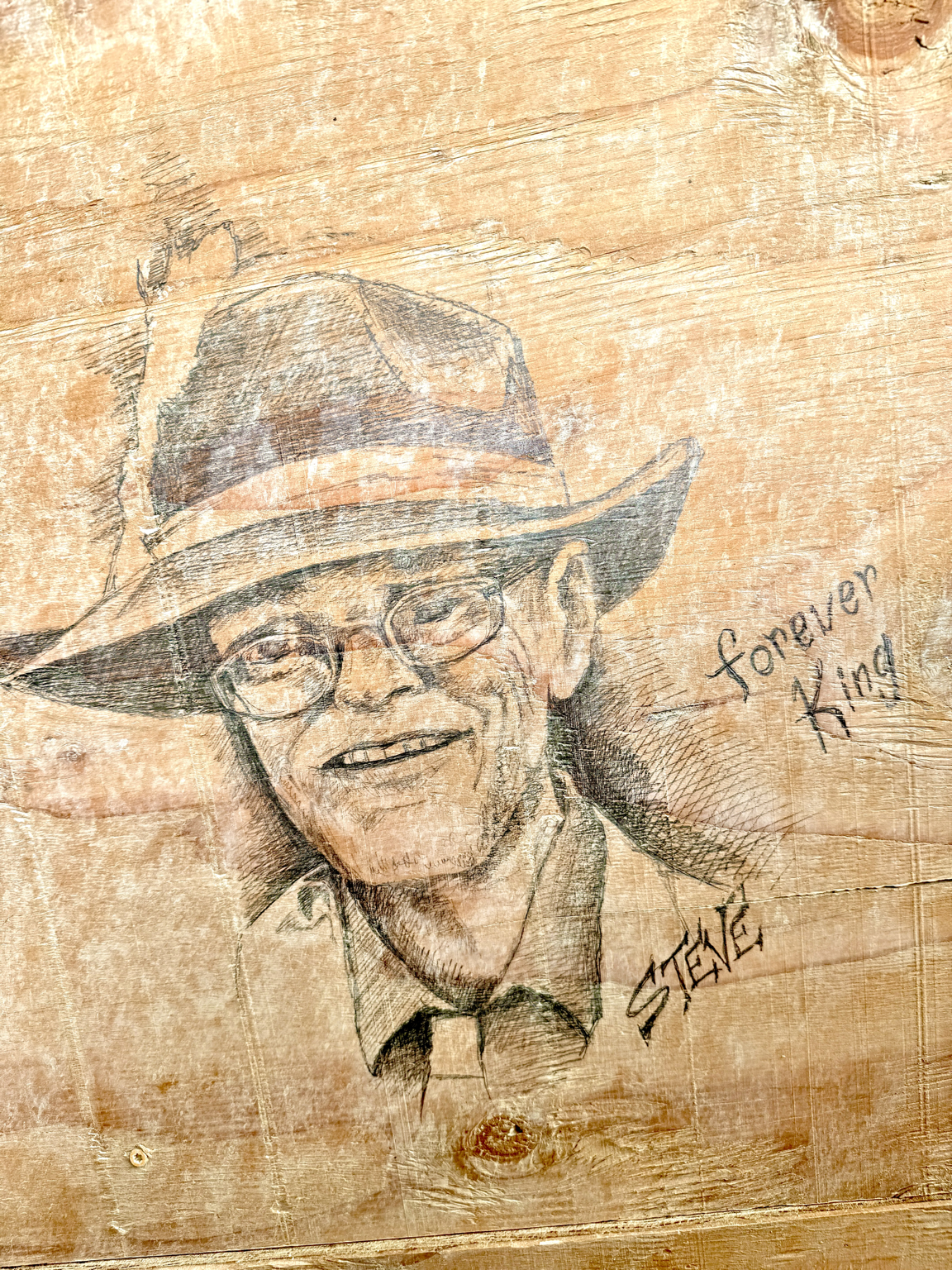
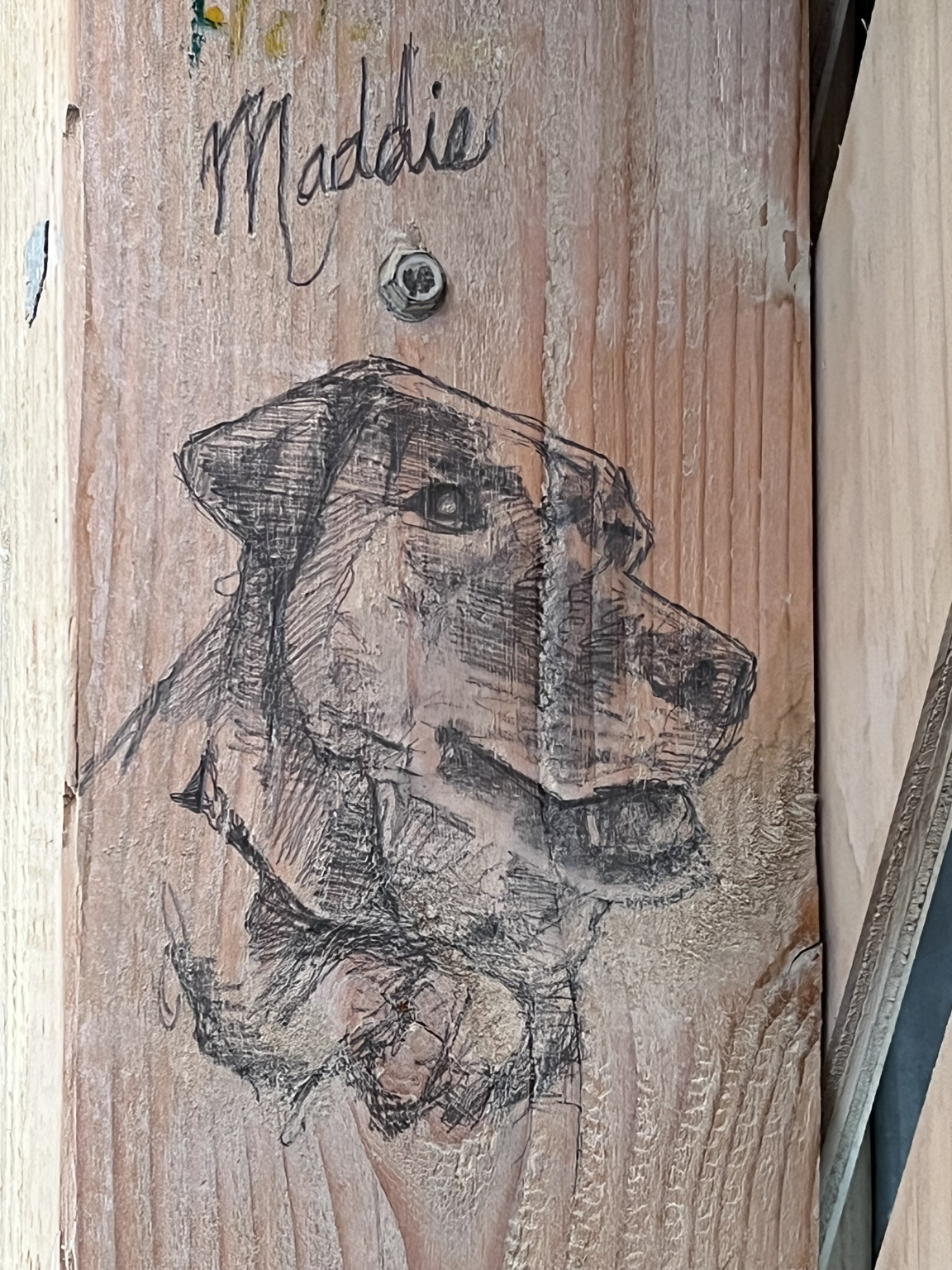
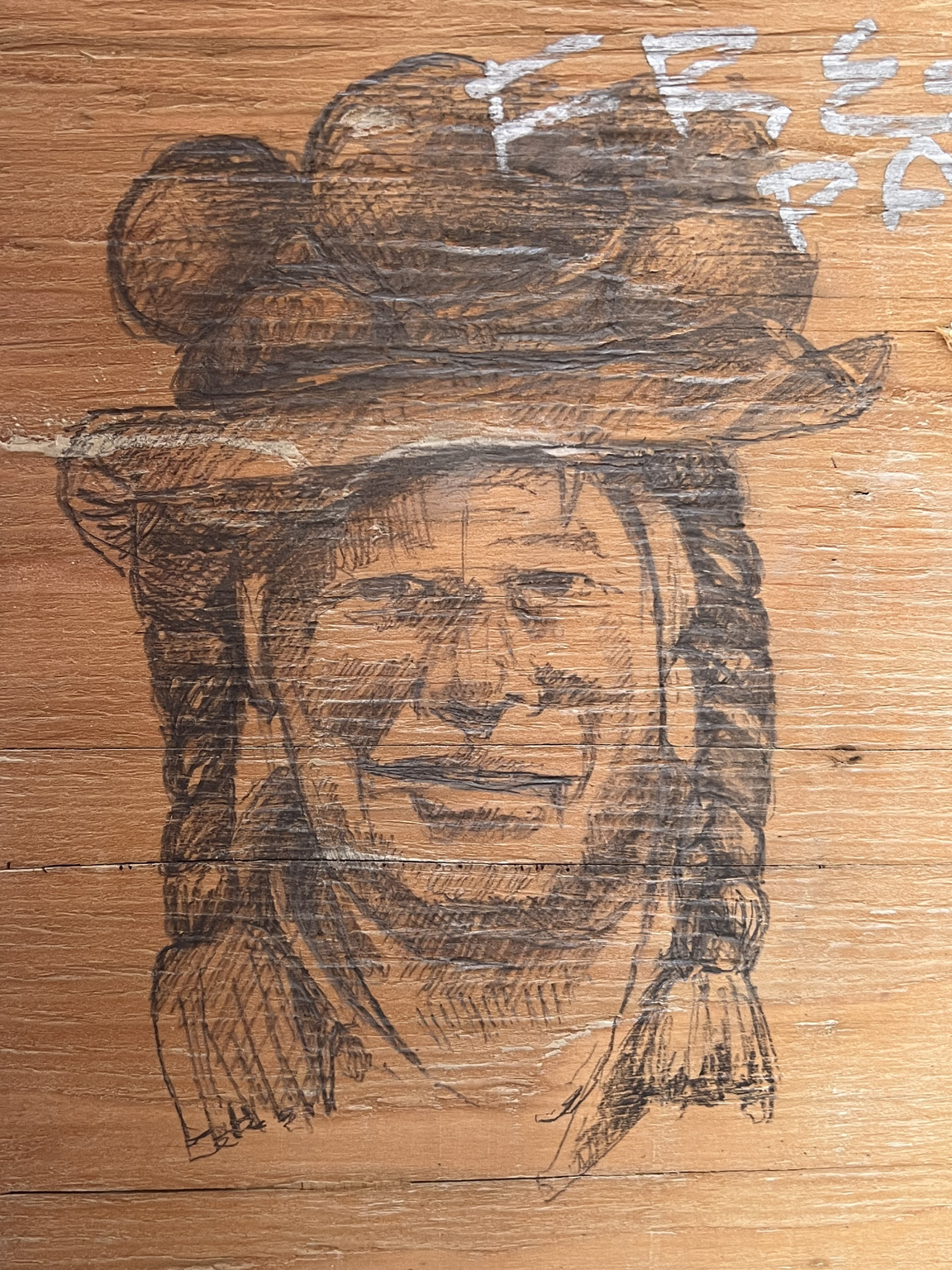
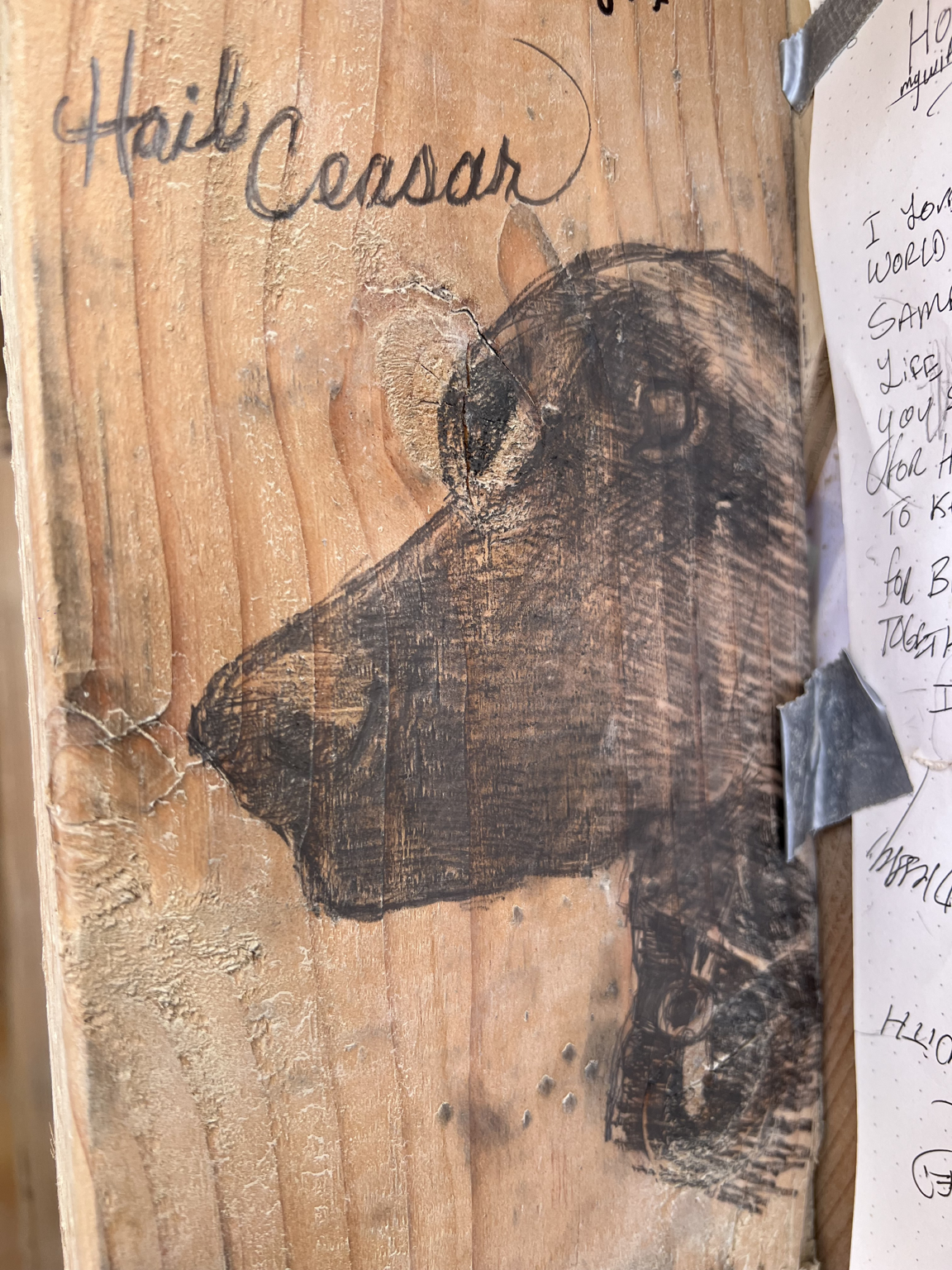
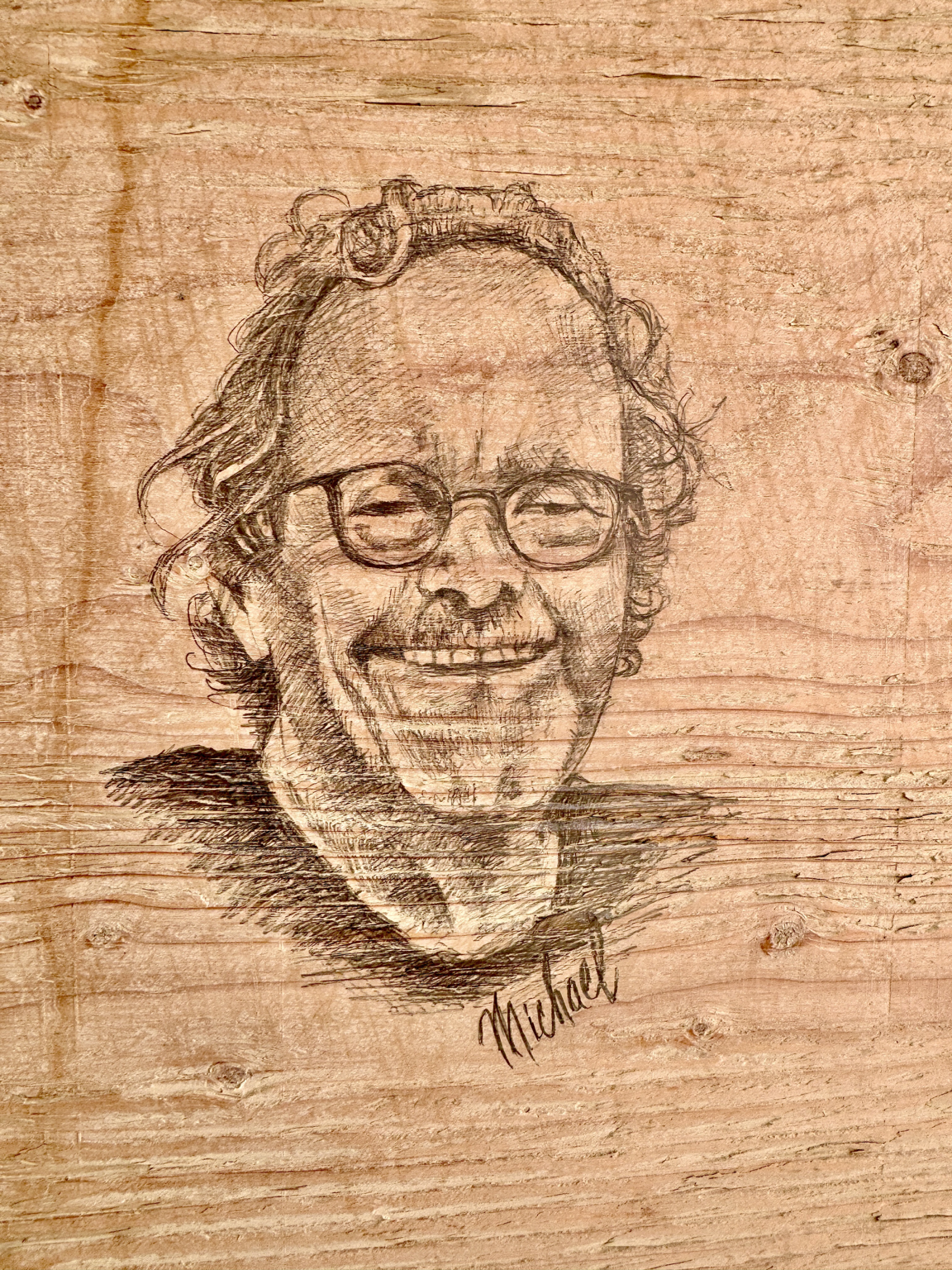
Each year, I chose someone I had known personally who had died and drew that person’s portrait directly onto the wooden Temple. Friends sometimes asked me to draw their dogs as well. Creating each portrait forced me to slow down, spend time with that face and think about what that life had meant to me. It became my private way of appreciating them and saying goodbye.
On Sunday night, the Temple and everything placed inside it are burned during a quiet, solemn gathering. Thousands watch as the photographs, portraits and messages disappear into the fire.
An ofrenda in Oaxaca and the Temple at Burning Man are not the same tradition. Their histories, beliefs and purposes are distinctly their own. But both recognize something deeply human: sometimes our memories need a physical place. Sometimes we need to place a photograph, write a message or draw a face because love and grief can be too large to carry without setting them down somewhere.
Taking Them to the Mississippi River
New Orleans has its own way of turning mourning into a celebration of life.
First, it is important to understand that Mardi Gras is not simply one day. It is an entire season of balls, gatherings, costumes and parades that ends on Fat Tuesday. On Mardi Gras Day, several walking groups make their way through the French Quarter, including the Society of St. Anne.
St. Anne is famous for extraordinary handmade costumes and a procession that gathers more people as it moves through the neighborhoods and into the French Quarter. But within all that color and celebration is a deeply moving tradition.
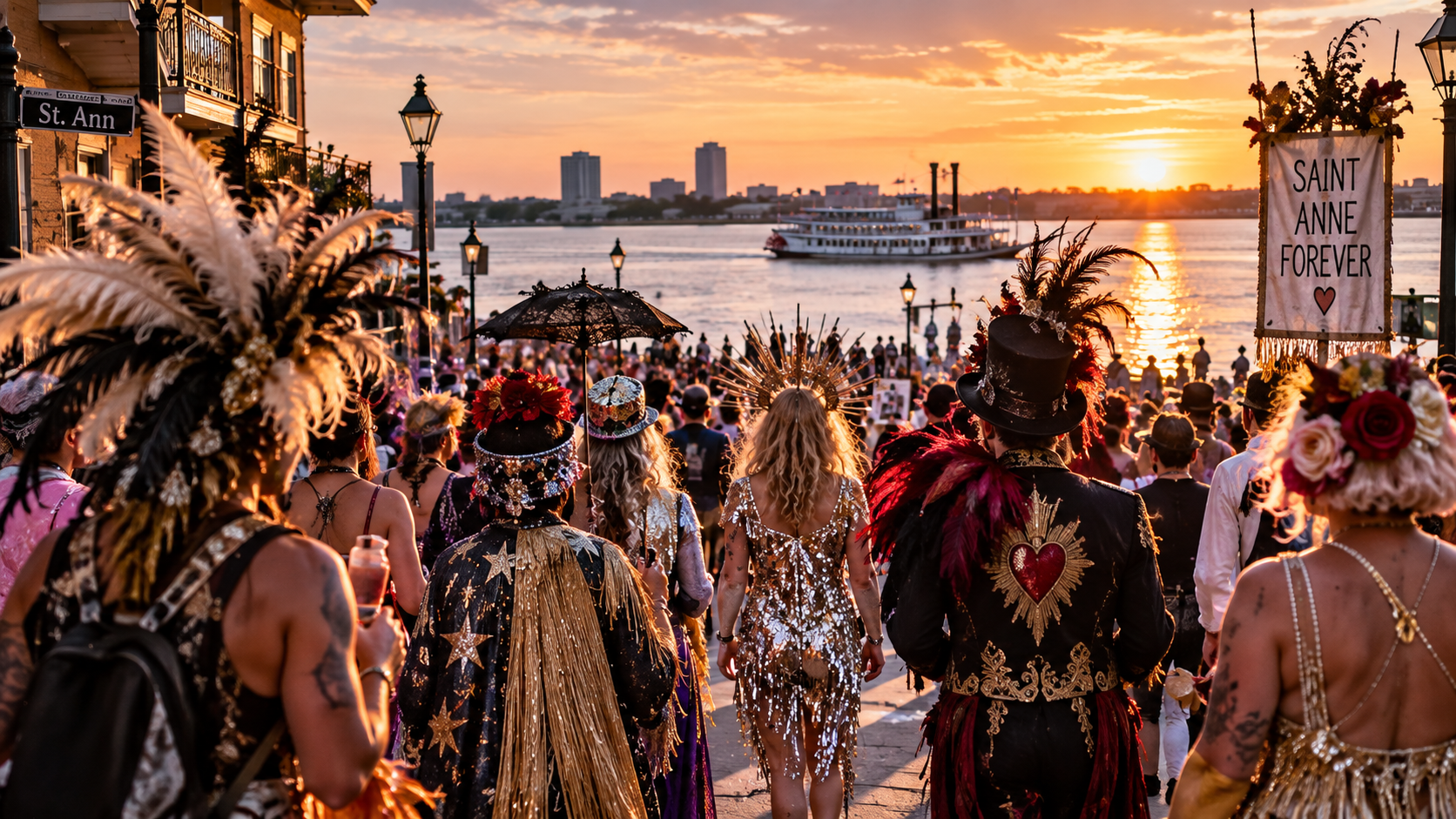
People carrying the ashes of friends, partners, family members and sometimes beloved animals walk to the Mississippi River. The memorial became especially meaningful during the AIDS crisis, when members of the New Orleans community carried the ashes of friends they had lost and gave them a final farewell in the river.
I have joined those processions. I have walked behind the second line band as the mood changed and “Just a Closer Walk with Thee” began to play. At the steps leading down to the Mississippi, people stood together, spoke names, held one another and released ashes into the river. There were tears, reflection and silence.
Then something distinctly New Orleans happened.
People wiped their eyes and stood back up. The band shifted into the joyful promise of “I’ll Fly Away,” the procession turned back toward the French Quarter, and mourning became music, movement and celebration again.
My family already knows what I want when my own time comes. Half of my ashes will go into the Mississippi River on Mardi Gras Day. The other half will be released into the sea at Playa Zipolite. Those are the two places I consider home, and that is where I want my final journey to take me.
Our Ofrenda in New Orleans
Our event will take place October 21–24, and on the evening of October 22 we will celebrate with a Día de los Muertos theme night. The traditional Mexican observance centers on November 1 and 2, but our ofrenda will remain with us throughout the weekend as a place of remembrance, reflection, and celebration.
If you would like to participate, bring a photograph of someone you loved. Choose one that captures their personality or brings back a story you enjoy telling. You may also bring a small offering connected to them: a favorite candy, a miniature bottle, a flower, a playing card, a handwritten note or some little object that would make the people who knew them say, “Yes, that is exactly right.”
An ofrenda should reflect the lives it honors and the community that creates it. So yes, of course we will have pineapples.
If you feel moved to, write a note and place it in one of the bowls on our ofrenda. And no, the bowls are not for your keys. It can be a goodbye, a thank-you, a wish, something you never had the opportunity to say, or simply something you have been carrying and are ready to let go.
You are welcome to feel whatever the memory brings. There is no correct way to grieve, and no one will be asked to turn a painful loss into a performance of happiness. We simply want to offer another possibility: a place where remembering someone can include laughter, music, gratitude, love and a really good story.
Día de los Muertos in Oaxaca, the Temple in the Black Rock Desert and the St. Anne procession to the Mississippi River are three distinctly different traditions. Each has its own history and must be understood on its own terms. Yet all three have taught me something beautiful.
We do not honor the people we love by remembering only that we lost them. We honor them by continuing to say their names, tell their stories, laugh about the things they did, and celebrate the lives they were brave enough to live.
So this October, I’ll open a bottle of tequila and pour a shot for Todd. And don’t worry—I’ll pour one for myself, too. I know he would want it that way.